What are the signs of radon poisoning?
There are no safe radon levels. Any exposure to the gas, no matter how small, can cause damage to the DNA in your lung, the lower the levels found in your home, the lower the risk you have of developing lung cancer.
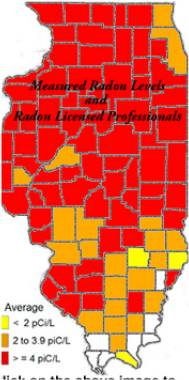
Pennsylvania has one of the most severe radon troubles in the United States. Around 40 percent of Pennsylvania houses have radon levels over Epa's activity guideline of 4 picocuries per liter. The rocks and also dirt below our residences contain traces of uranium. When radon gas decomposes, it discharges radioactive radiation in the form of an alpha fragment.
Nonetheless, people that breathe in high levels of radon go to a boosted danger of establishing lung cancer cells. It remains to see radon as a threat, nevertheless, maintaining that four pCi/ l constitutes an "action degree" making remediation suggested.
These are tiny, heavy, electrically charged, sub-atomic particles consisting of 2 protons and also two neutrons. If an alpha fragment strikes the chromosomes in a lung cell, it can change the way that cell reproduces. Our body's body immune system should acknowledge and also damage these mutant cells before they can multiply over the following 10 to two decades into an identifiable malignant development. The key method of radon decrease (or reduction) includes the installation of an Active Dirt Depressurization (ASD) system. An ASD system involves the installation of an airing vent system that eliminates radon gas from the dirt beneath a home's foundation.
Water that originates from deep, underground wells in rock might have greater levels of radon, whereas surface area water (from lakes or rivers) usually has extremely low radon levels. For the most part, water does not contribute much to overall exposure to radon. It is generally found at really reduced levels in outdoor air and also in drinking water from rivers and also lakes. It can be found at higher degrees airborne in residences and various other buildings, in addition to in water from below ground resources, such as well water. The dirt is caught in our respiratory tracts and also releases radiation that harms the inside of our lungs.
Myths concerning Radon and Lung Cancer Cells
Why is radon bad for you?
Radon produces a radioactive dust in the air we breathe. The dust is trapped in our airways and emits radiation that damages the inside of our lungs. This damage, like the damage caused by smoking, increases our risk of lung cancer.
For this populace about 62 people in a 1,000 will certainly die of lung-cancer, contrasted to 7.3 individuals in a 1,000 for never cigarette smokers. Put another way, a person who never ever smoked (never smoker) who is exposed to 1.3 pCi/L has a 2 in 1,000 possibility of lung cancer; while a cigarette smoker has a 20 in 1,000 opportunity of dying from lung cancer cells. You won't need any kind of significant remodellings to deal with radon, however it's not a diy task, either.
How much does radon cost per gram?
Radon is available at a cost of about $4/mCi.
Air-radon degrees vary naturally on a seasonal and also daily basis. A short term test (90 where does radon come from days or much less) may not be a precise evaluation of a residence's average radon degree, yet are suggested for preliminary testing to quickly identify undesirable conditions. Short-term weather condition such as wind and adjustments in barometric pressure can impact short-term focus in addition to air flow such as open windows and also the procedure of exhaust fans. Two studies reveal clear-cut evidence of an association in between domestic radon exposure and lung cancer cells.
Nationally, the EPA estimates that about 21,000 people die every year from radon-related lung cancer. As many as 1 in 15 UNITED STATE residences have high degrees of radon, according to the EPA. However particular geographical areas are more probable to be affected.
What do you do if your house has radon?
Radon can seep into any home that is in contact with the ground. It is undetectable unless you perform a radon test. It is the second leading cause of lung cancer and according to the EPA and CDC, it kills more than 20,000 annually. It is not something you want in the home you are buying.
Although the EPA action overview for radon is 4 pCi/L, EPA also recommends that you think about repairing your home if your radon levels are between 2 as well as 4 pCi/L. In Massachusetts, it is approximated that 650,000 homes have radon degrees that go beyond the EPA activity guideline of 4 pCi/L. Radon is a carcinogen, which means it is recognized to cause cancer in humans. While there are many sources of radiation, radon remains the largest source of exposure. Since we spend a lot time inside, radon in the house stands for the biggest direct exposure as well as concern.
What are the chances of getting lung cancer from radon?
Granite, like any other stone, may contain veins of naturally occurring radioactive elements like uranium, thorium, and their radioactive decay products. If present, uranium, thorium or radium will decay into radon, a colorless, odorless, radioactive gas that may cause lung cancer.
The EPA studied the lung cancer risk of uranium miners revealed to 400 pCi/L. They assume the risk of a house owner revealed to 4 pCi/L to be one hundredth as much. Based on this assumption, the EPA standard level of 4 pCi/L stands for a much higher risk than permitted other toxic wastes. Scientists believe radon exposure is the second leading cause of lung cancer cells.
- You can get assist from the EPA by calling RADON () if you have concerns regarding radon in your house.
- Actually, study shows that cigarette smokers are practically seven times more likely to establish lung cancer cells than nonsmokers when subjected to the same quantity of radon.
- Radon does not rest in trying to get involved in your house, so the follower continues to run as it develops airflow to keep pressing radon outdoors via the mitigation system.
- Nonetheless, these are normally not major contributors to the radon levels in a house.
- Radon can enter your residence with cracks and also openings in the foundation, through well water, and also by means of structure products, the Environmental Protection Agency (EPA) claims.
Things to find out about passive systems is that they are, at the threat of appearing cheesy, "passive". You can definitely have high radon levels with an easy system that isn't doing sufficient. Speaking from experience, we service easy systems daily by transforming them to active with using a correct radon fan after the house owner's radon levels evaluated high (despite the fact that they have a 'passive' system). There are additionally lot of times that the pipelines are not mounted appropriately and also can not be made use of, providing them pointless as well as leaving the requirement to mount a whole new system. The only way to recognize if your "passive" system is working is to examination.
Is a radon level of 3 safe?
No, not at all. But a claim that a company can completely eliminate radon from your home should be very closely scrutinized. By definition, Radon Mitigation is any process used to reduce radon gas concentrations in the breathing zones of occupied buildings.
Can you smell radon?
The “safe” level of radon exposure is no radon at all. The EPA's recommended level for radon mitigation is 4.0 pCi/L or above. It's estimated that 1 in 15 American homes have an elevated level of radon gas.
Is radon only in the basement?
Radon is completely odorless as well as being invisible. Because it is often found unexpectedly in basements, some people mistakenly believe that it only occurs in basements. Most commonly homes with basements are suspect for having higher radon levels.
Is radon heavier than air?
Radon gas is approximately 7.5 times heavier than air. It is however a noble gas with no chemical affinity but http://felixvypu019.xtgem.com/wellness%20results%20of%20radon is easily influenced by air movements and pressure. In a house with forced air heating and cooling, radon gas can easily be distributed throughout the entire dwelling.
How do you eliminate radon?
If a person has been exposed to radon, 75 percent of the radon progeny in lungs will become "harmless" lead particles after 44 years. When an alpha particle damages a cell to make it cancerous, the onset of lung cancer takes a minimum of 5 years but most often 15 to 25 years, and even longer.
Where is Radon most commonly found?
There's no single method that fits all radon removal system needs. Common techniques include: Sub-slab depressurization, where suction pipes are inserted through the floor or concrete slab into the concrete slab below the home. A radon vent fan then draws out the radon gas and releases it into the air outside.
How effective is radon remediation?
The Surgeon General and the EPA recommend testing for radon and reducing radon in homes that have high levels. Fix your home if your radon level is confirmed to be 4 picocuries per liter (pCi/L) or higher. Radon reduction systems work. Some radon reduction systems can reduce radon levels in your home by up to 99%.
Is a radon level of 5 bad?
Safe radon levels. The best radon level measurement would be zero. The average global outdoor radon level varies between 5-15 Bq/m3, equal to 0.135-0.405 pCi/L. For every 99.9 Bq/m3, or every 2.7 pCI/L increase in long term radon exposure, lung cancer risk rises 16 percent.
What causes radon?
Being exposed to radon for a long period of time can lead to lung cancer. Radon radon remediation cost gas in the air breaks down into tiny radioactive elements (radon progeny) that can lodge in the lining of the lungs, where they can give off radiation. This radiation can damage lung cells and eventually lead to lung cancer.
How do you get rid of radon gas in a basement?
The radon fans are guaranteed by manufacturers for 3 – 5 years. Their replacement cost, including installation, is usually $300 to $600. Homeowners are aware that the fan must run continuously 24/7, year after year. The typical estimate of the electricity cost is $150 per year.
Do all homes have some level of radon?
The EPA estimates the lifetime risk of radon-induced lung cancer for never-smokers at 7 per 1,000 people, compared with 62 per 1,000 for smokers exposed to a level of 4 pCi/L. Your risk goes up with your exposure to radon and cigarette smoke over time.